
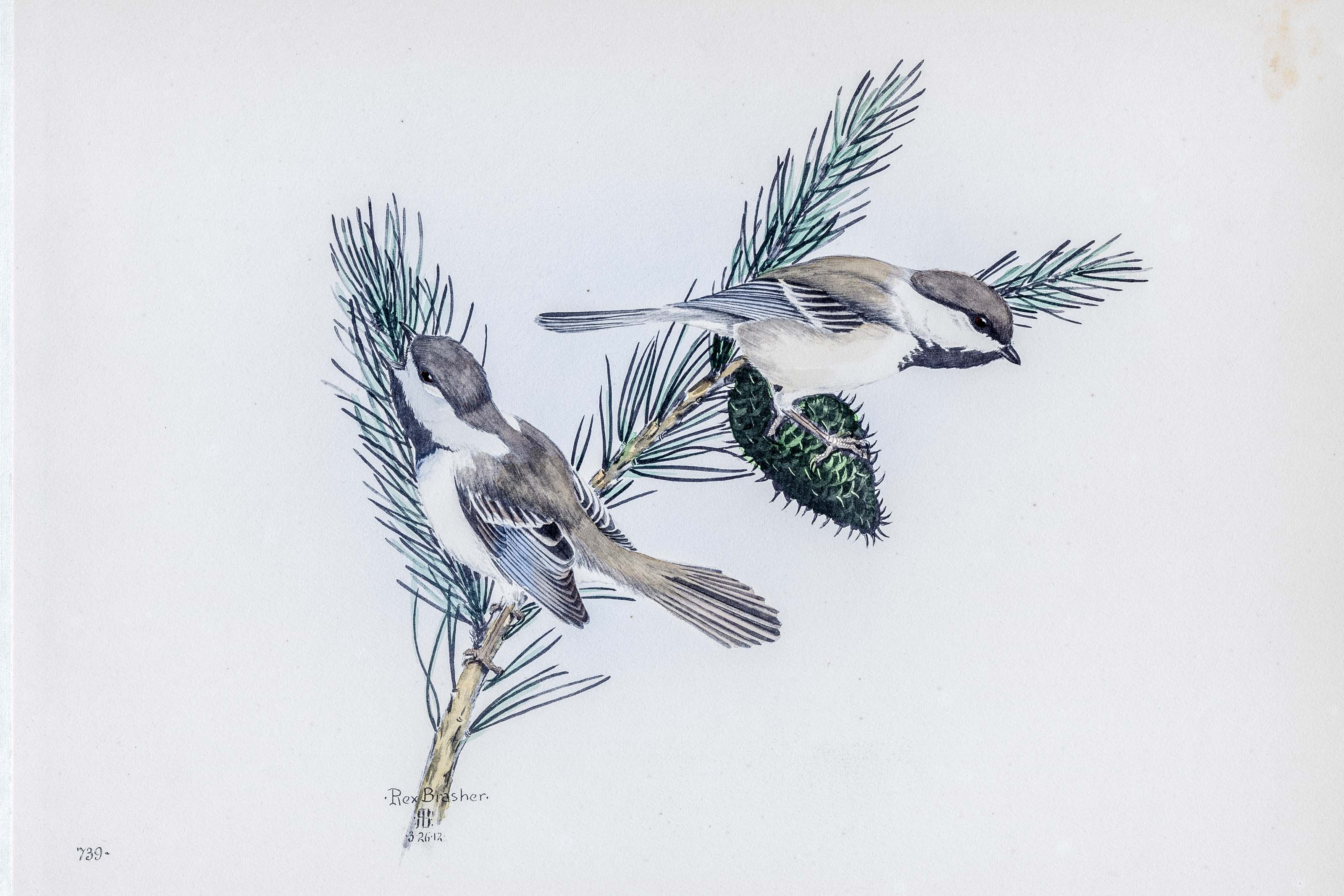
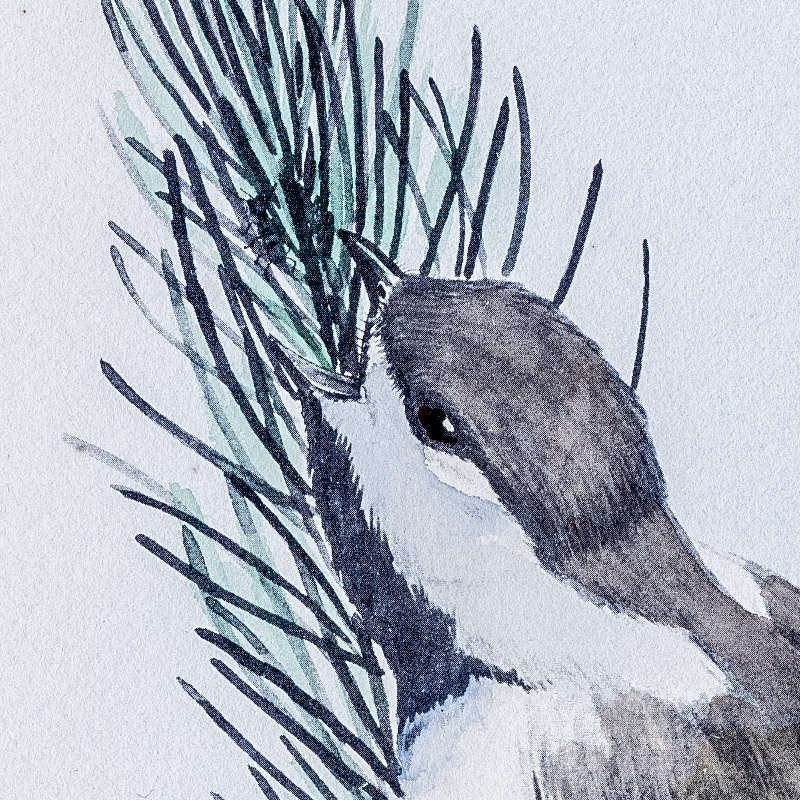
In the bleakest regions of the northern hemisphere this indomitable little fleck o' feathers spends its life. A few hardy spirits leave their Siberian homeland and fare across Behring Straits into the equally inhospitable wilds of Alaska. The chemistry of their bodies must be adjusted to the sun's absence and their eyesight developed beyond normal to see food in the darkness which envelops those grim areas for more than half the year.
Little is known of their habits because the few adventurers who penetrate their range are too busy keeping the cold at bay to observe a tiny bird. By analogy, tho, it is a safe conclusion to believe they are the same happy-go-lucky sprites as other members of the family.
NEST: of hair, feathers and fur: in cavities.
EGGS, 5 to 9. White, finely specked with brown shades.
Northern Alaska, St. Michael and Kowak rivers, east to Anderson River, northwestern Mackenzie, in Hudsonian zone.
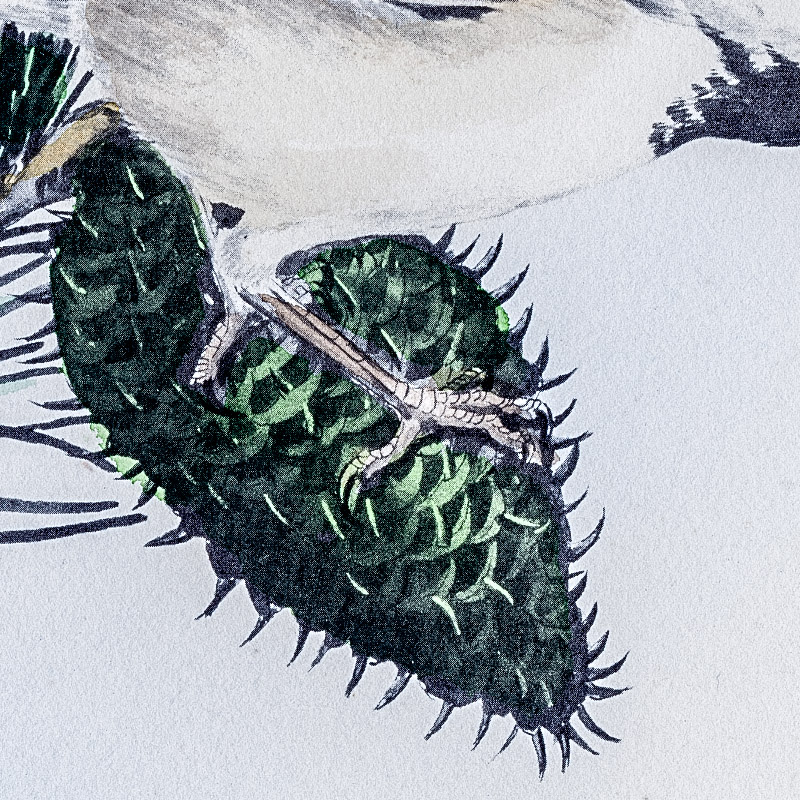
A small thickly branching tree, 15 to 25 feet high. Ranging from coast bogs of Alaska to Mendocino county, California. In the United States it usually grows in dunes, barren or deep swamps. Its characteristics change as it ascends the western Cascades and merges into the Lodge Pole Pine, var. Murrayana.