
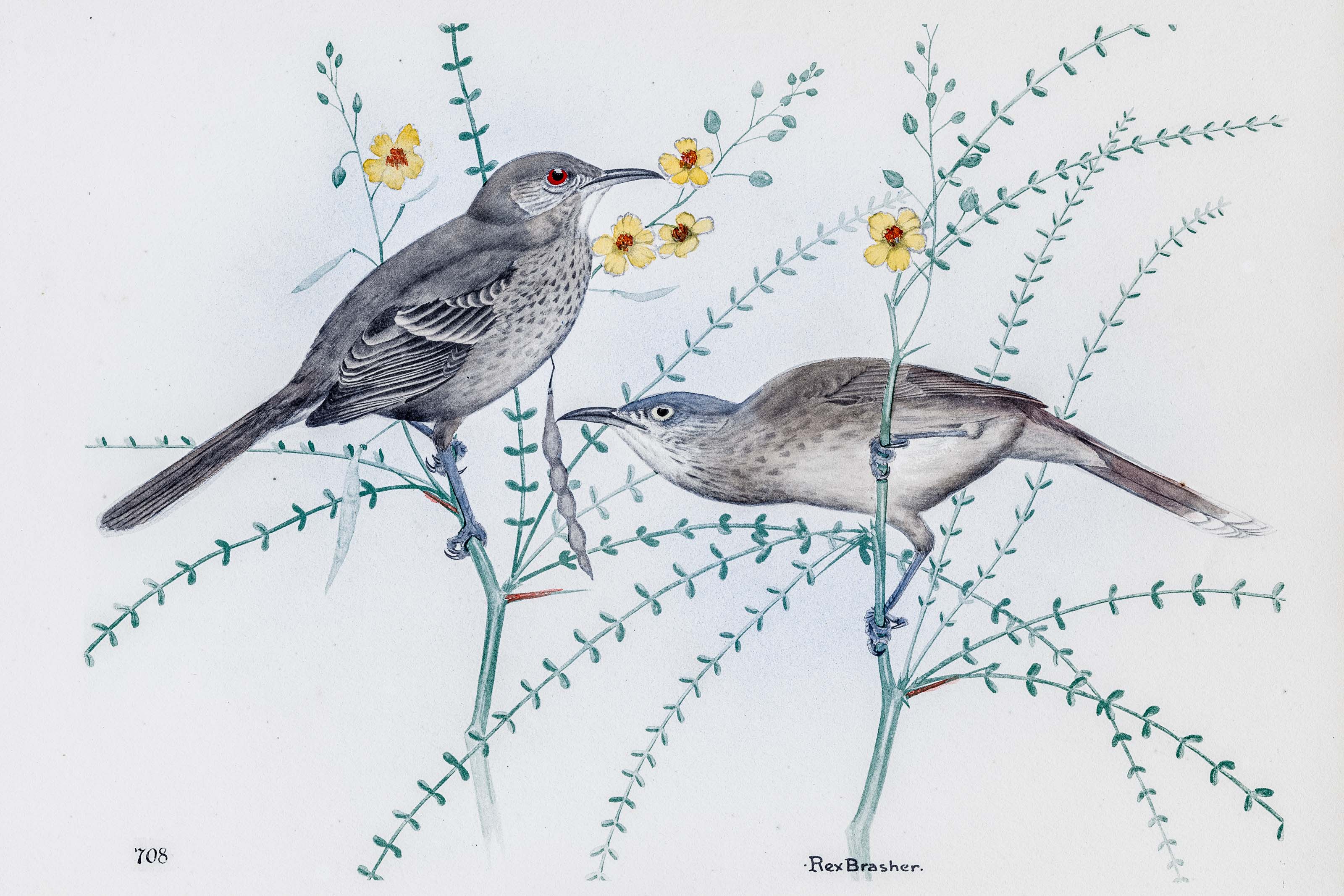
Tho shy and skulking behind mesquite and brush during the Fall and Winter, these birds become quite sociable during the summer. They visit the vicinity of dwellings and, if unmolested, nest in their vicinity. Its song, according to Gilman, is superior to that of all other western Thrashers.
NEST: In desert trees and cactus brush within three feet of ground, small and more carefully built than those of other Thrashers; of twigs and grass, lined with wool, feathers, hair and fine grass.
EGGS: 3–4; green or gray white spotted more thickly at large end with chestnut and lavender.
Southeastern California and southern Arizona.
A 25-foot tree, distributed in Rio Grande, Texas, Colorado river and Arizona vallies and in Lower California.