
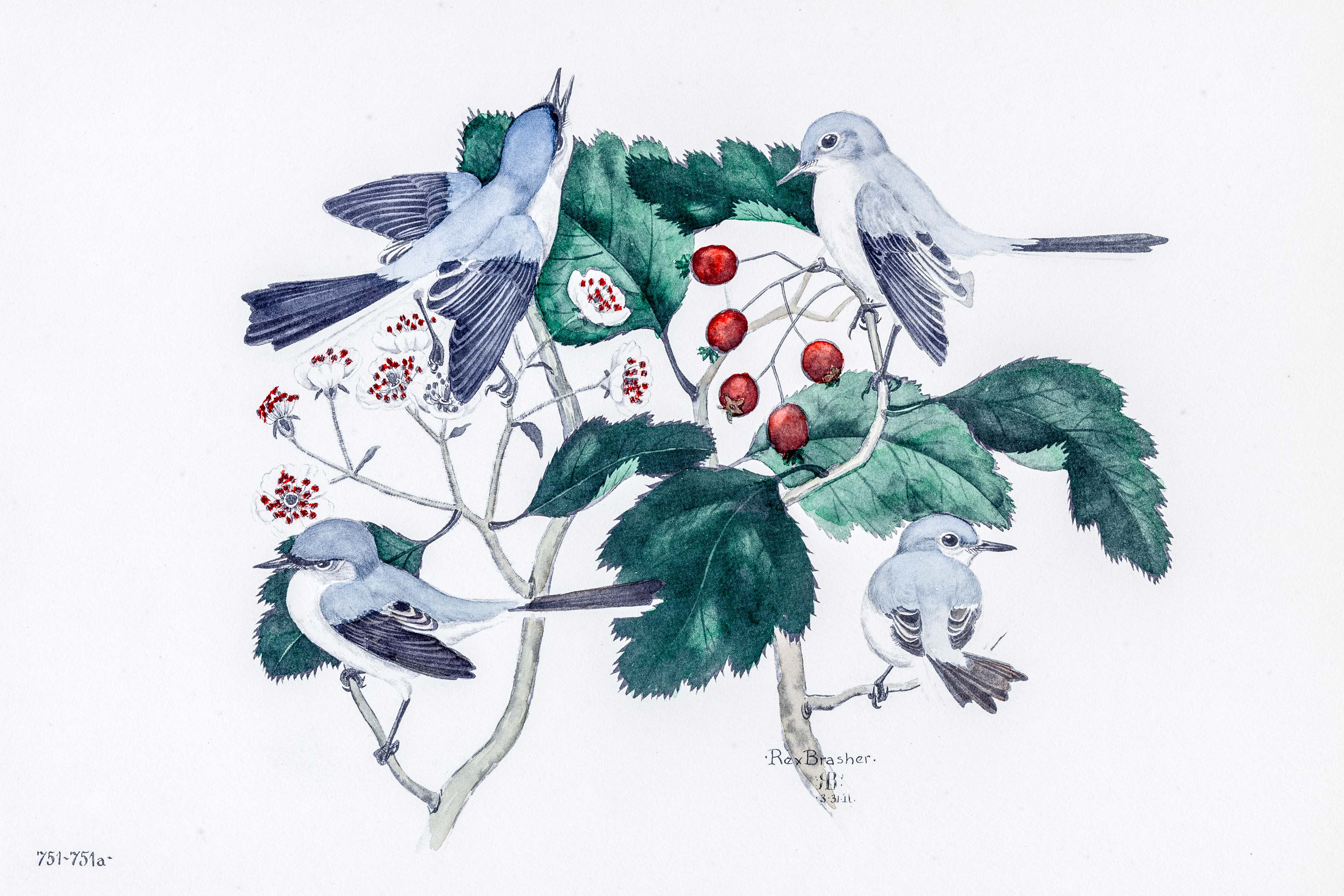

THO ONE of the sweetest singers of the southland its notes are so weak — have so little carrying power — that one may pass in spring thru woodland resonant with songs of mating birds and never suspect that these little Graycoats are among the most abundant feathered inhabitants of the region. When curiosity brings one into view from the screening leaf canopy, the observer is likely to think a miniature Mockingbird is looking him over, so closely do they resemble their larger cousins. Many kinds of birds maintain a discreet silence when near their nests but not the Gnatcatchers! Sometimes males will exercise their vocal powers to the utmost within a few feet of the brooding females. On more than one occasion I have watched a male singing with might and main while taking his turn at housekeeping on the eggs. —Pearson.
NEST: a perfect cup with contracted brim, one and a half inches wide and deep; built of silky milkweed or cattail down, withered blossoms or other dainty material pinned with fine grasses, leaf stems and horsehair. Exterior decorated with lichens tied on with spiderwebs, usually saddled on horizontal limb where it resembles a knot.
EGGS, 4 or 5, greenish or bluish white, speckled with chestnut, umber brown or lilac.
Southeastern United States. Breeds in Lower Austral and Carolinian zones from Eastern Nebraska, southern Wisconsin, Michigan and Ontario, southwestern Pennsylvania, Maryland and southern New Jersey south to southern Texas and central Florida. Winters from Gulf States and northern Florida, southward.
These active, highstrung little sprites are never still, going about whipping their tails sideways, cocking heads to look up or down, and with nervous emphasis, here I am — here I am! They are most entertaining birds to watch, jaunty individualists full of quaint airs and graces. Tho airy and light o' manner — as parents they fear nought, flying boldly at any intruders who threaten their youngsters and driving them off with good set blows. —Bailey.
Nest and eggs similar to Bluegray Gnatcatcher.
Western United States. Breeds in Upper and Lower Sonoran zones from Siskiyou county, California, southern Nevada, Utah and Colorado south to Cape region of Lower California. East to Pecos river, Texas. Winters from southern California and Arizona south to Cape San Lucas.
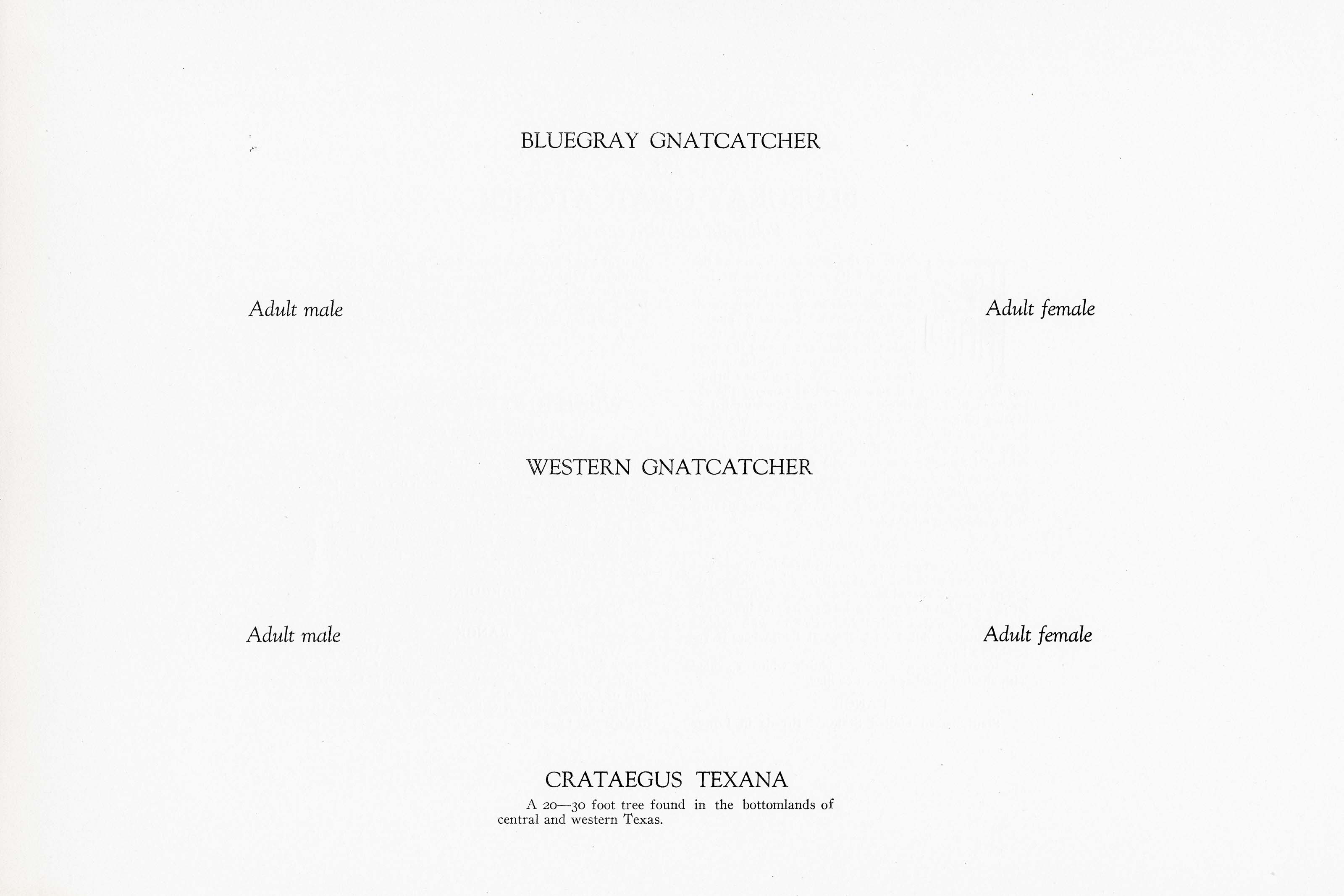
A 20–30 foot tree found in the bottomlands of central and western Texas.