
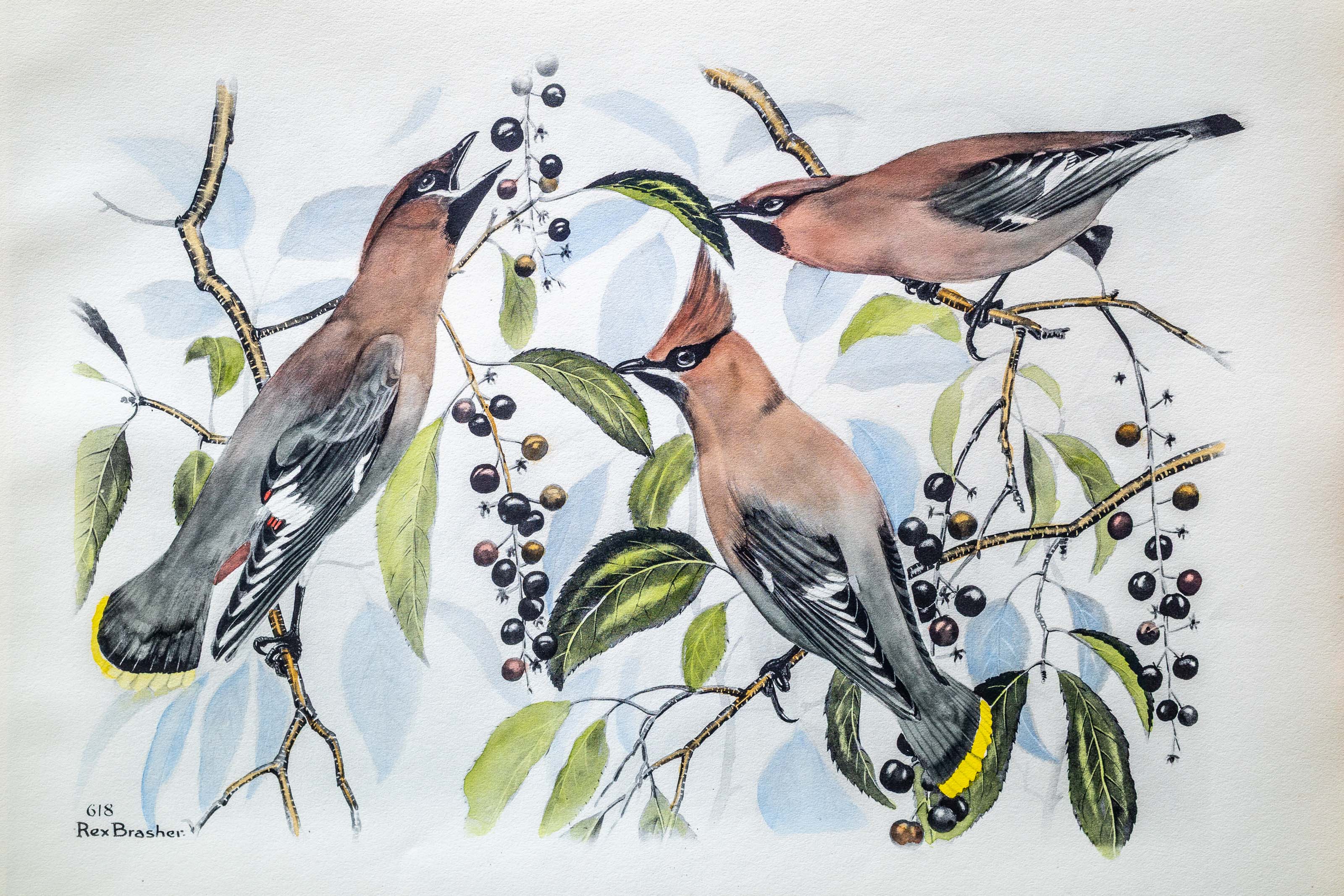
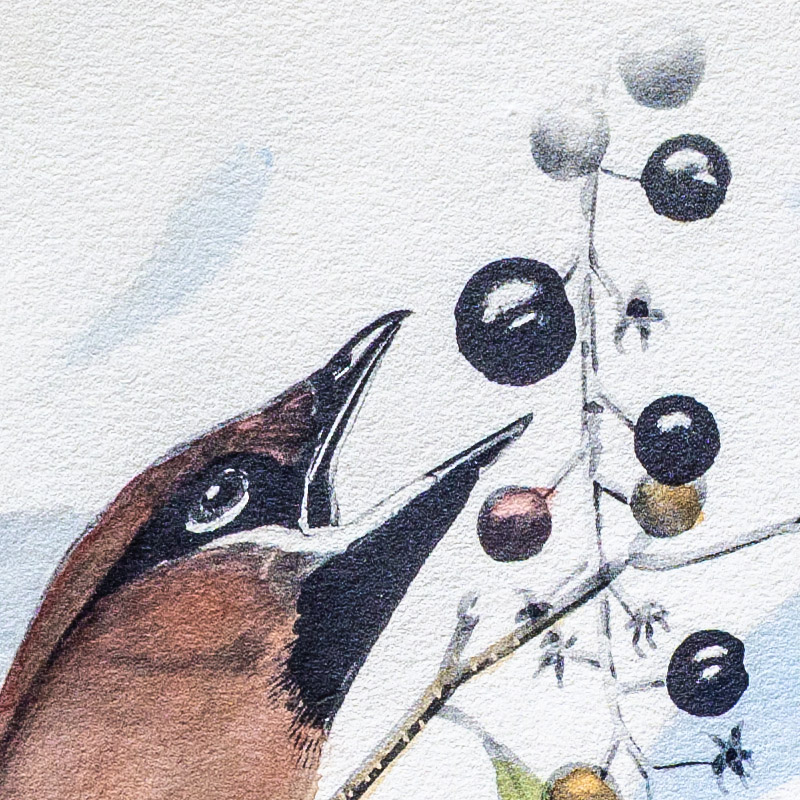


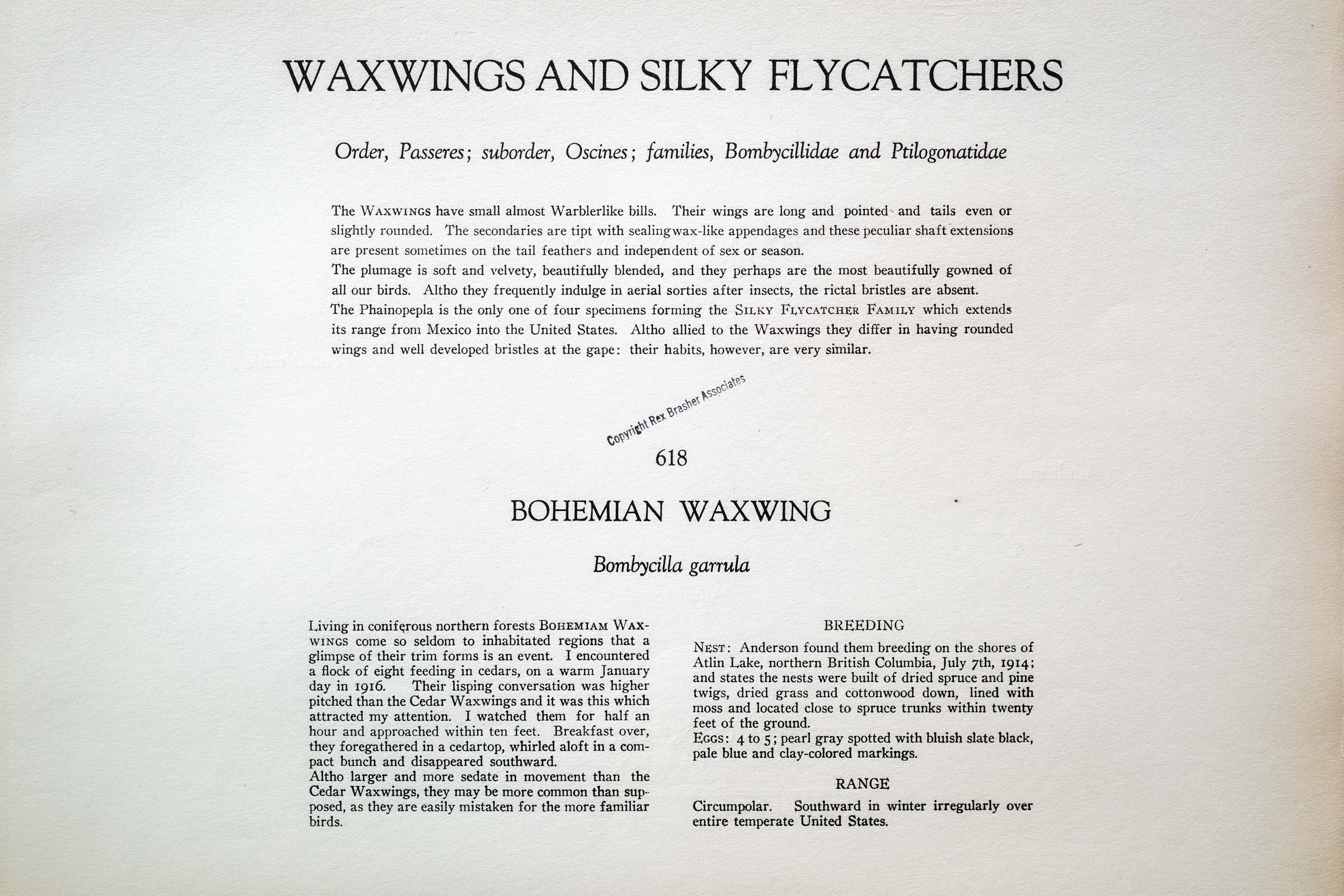
Living in coniferous northern forests BOHEMIAN WAXWINGS come so seldom to inhabited regions that a glimpse of their trim forms is an event. I encountered a flock of eight feeding in cedars, on a warm January day in 1916. Their lisping conversation was higher pitched than the Cedar Waxwings and it was this which attracted my attention. I watched them for half an hour and approached within ten feet. Breakfast over, they foregathered in a cedartop, whirled aloft in a compact bunch and disappeared southward.
Altho larger and more sedate in movement than the Cedar Waxwings, they may be more common than supposed, as they are easily mistaken for the more familiar birds.
NEST: Anderson found them breeding on the shores of Atlin Lake, northern British Columbia, July 7th, 1914; and states the nests were built of dried spruce and pine twigs, dried grass and cottonwood down, lined with moss and located close to spruce trunks within twenty feet of the ground.
EGGS: 4 to 5; pearl gray spotted with bluish slate black, pale blue and clay-colored markings.
Circumpolar. Southward in winter irregularly over entire temperate United States.
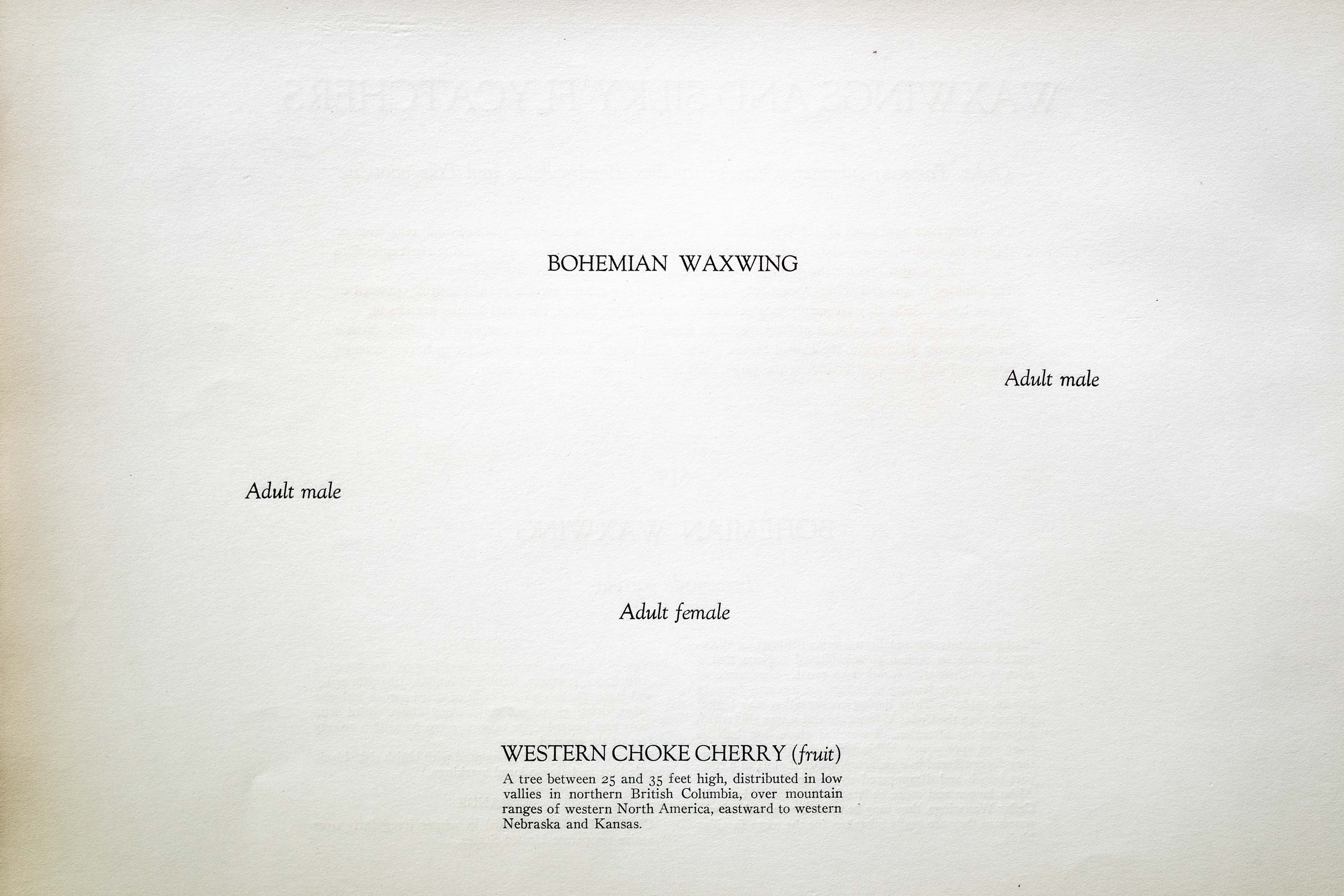
A tree between 25 and 35 feet high, distributed in low vallies in northern British Columbia, over mountain ranges of western North America, eastward to western Nebraska and Kansas.