
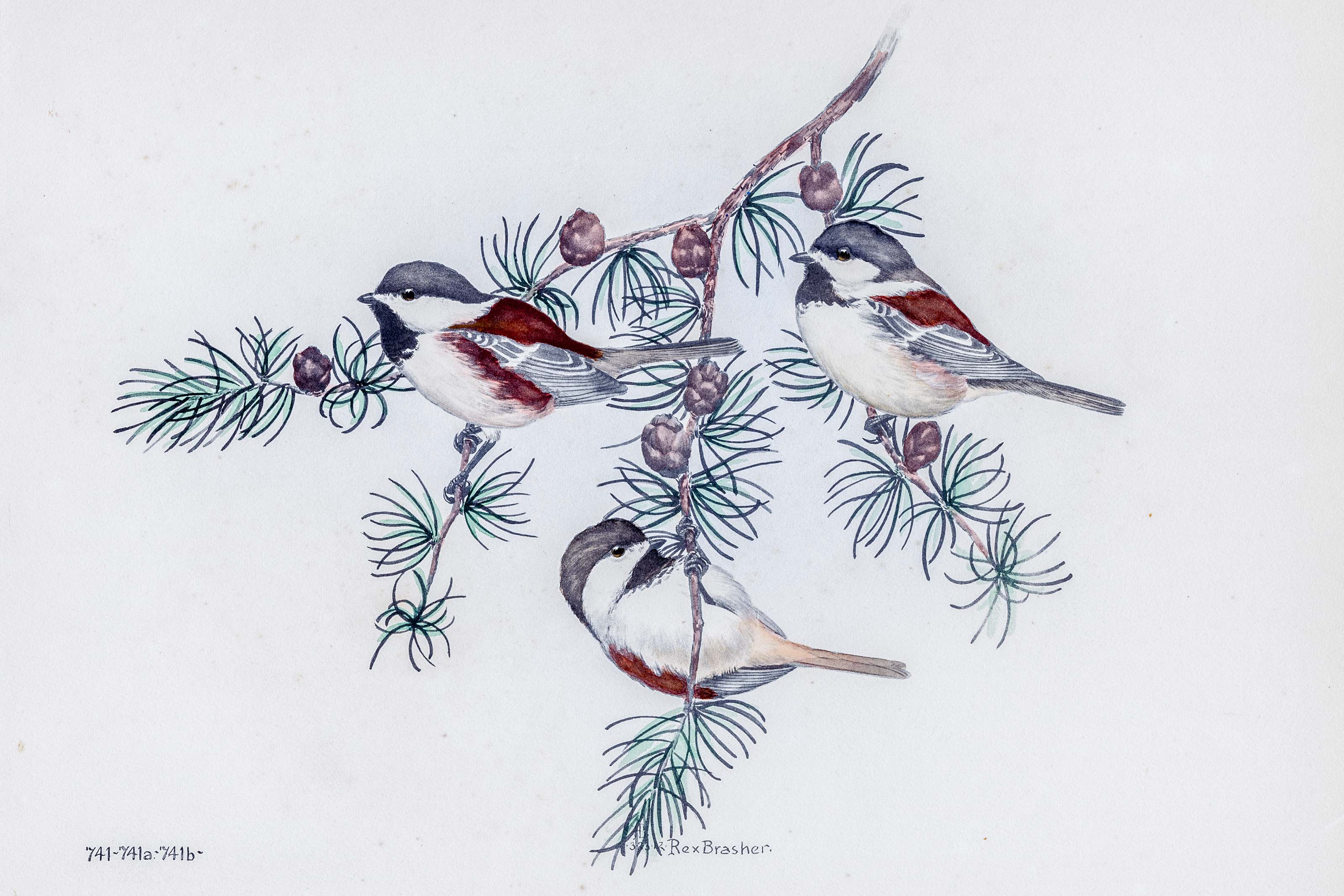
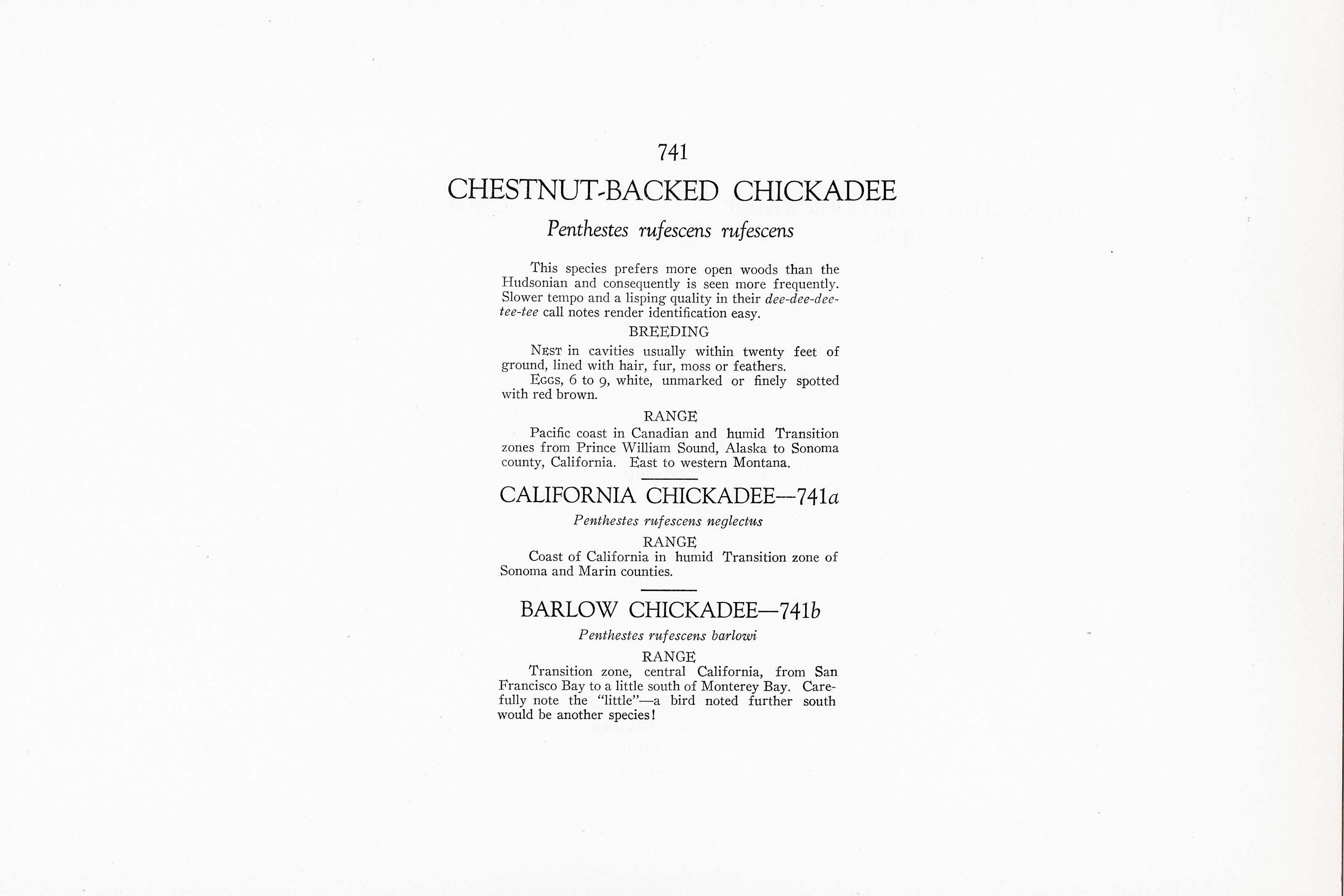
This species prefers more open woods than the Hudsonian and consequently is seen more frequently. Slower tempo and a lisping quality in their dee-dee-dee-tee-tee call notes render identification easy.
NEST: in cavities usually within twenty feet of ground, lined with hair, fur, moss or feathers.
EGGS, 6 to 9, white, unmarked or finely spotted with red brown.
Pacific coast in Canadian and humid Transition zones from Prince William Sound, Alaska to Sonoma county, California. East to western Montana.
Coast of California in humid Transition zone of Sonoma and Marin counties.
Transition zone, central California, from San Francisco Bay to a little south of Monterey Bay. Carefully note the "little" — a bird noted further south would be another species!
A 50-foot tree distributed from the Arctic Circle south to northern Pennsylvania, Indiana, Illinois, Minnesota and on eastern foot hills of the Rockies. The largest and most abundant tree in central Labrador.