
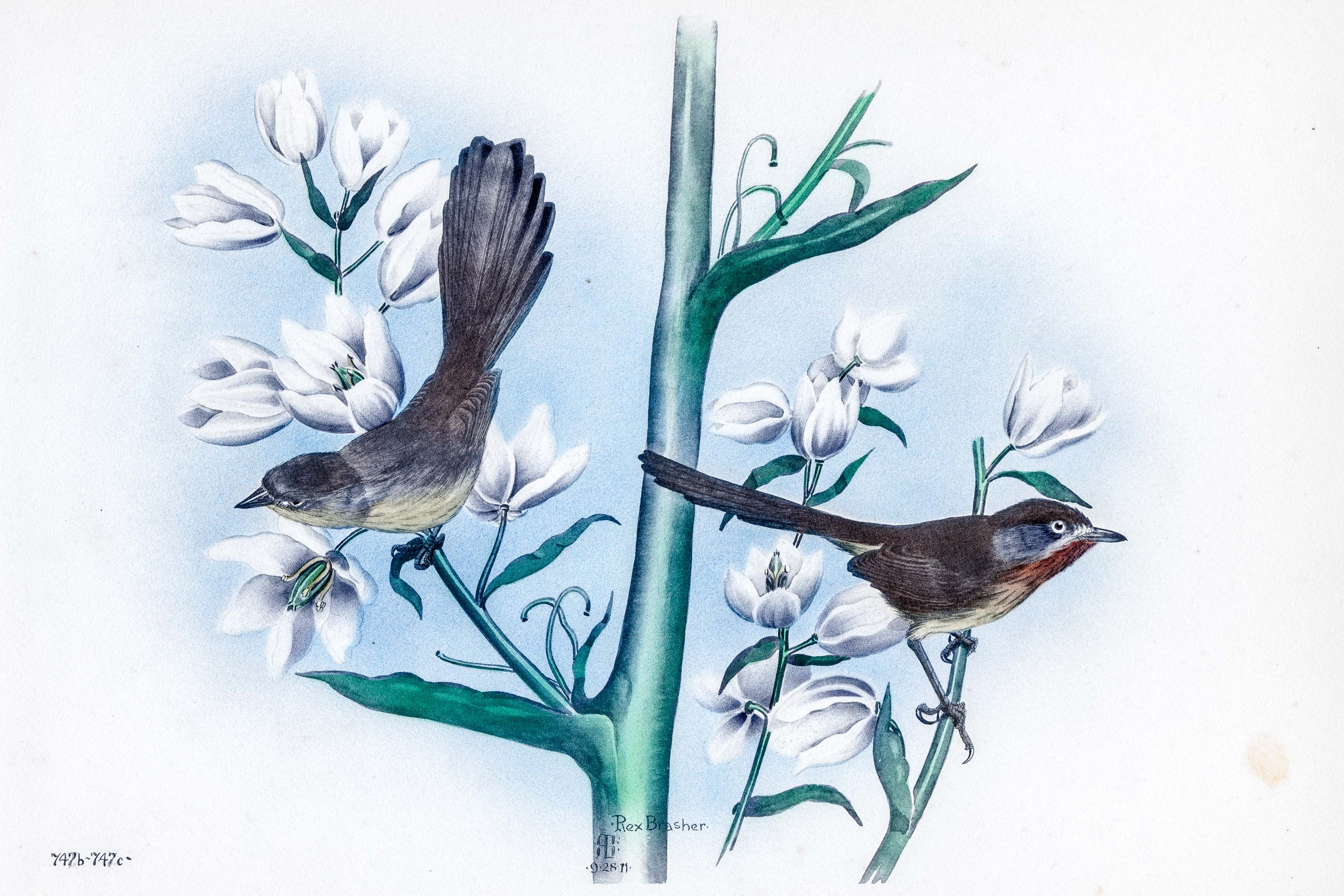

They handle their fluffy bodies with precision and dignity but not their tails! An insect is reached for and absorbed with nonchalance but an intruder is greeted with much lateral or horizontal tail wagging. The twitching of this disproportionately long appendage is their most conspicuous mannerism. In short flights of a few feet it is violently flapped vertically in rhythm with wing beats giving the impression of a third wing in action. Even in singing each note is accentuated with a tail jerk. In the Wrentits the tail is a perfect indicator of the bird's mental attitude varying in tempo and elevation with its degree of excitement or interest.
The young forage with the parents until early fall when they separate into pairs but do not wander far from the home grounds being practically non-migratory.
Nest and eggs similar to Wrentit.
Humid Transition zone of Oregon coast and northern California from Columbia river to Humboldt bay.
Nest and eggs similar to Wrentit.
Humid Transition coast strip of California from southern Humboldt county south to Santa Cruz.
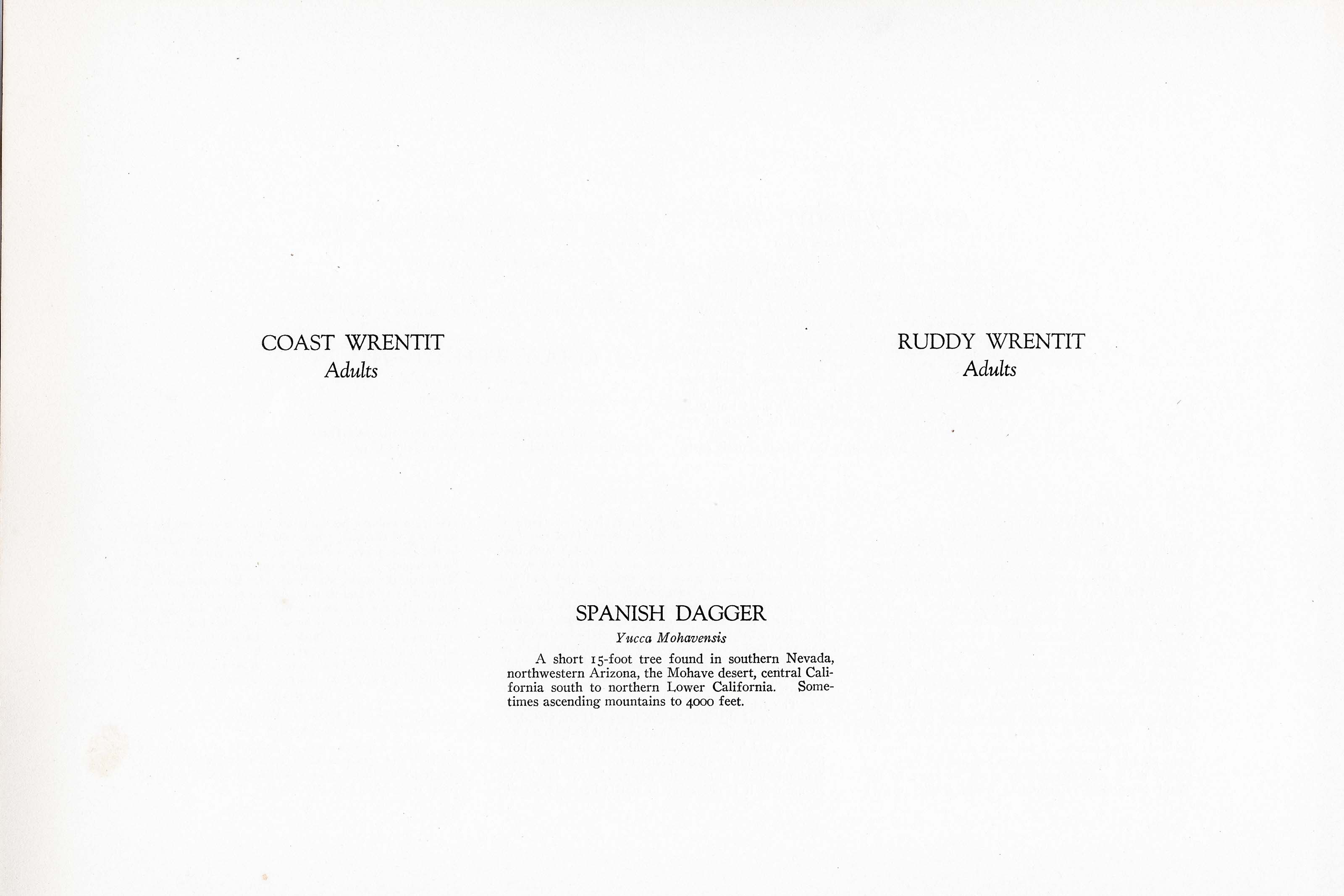
A short 15-foot tree found in southern Nevada, northwestern Arizona, the Mohave desert, central California south to northern Lower California. Sometimes ascending mountains to 4000 feet.