
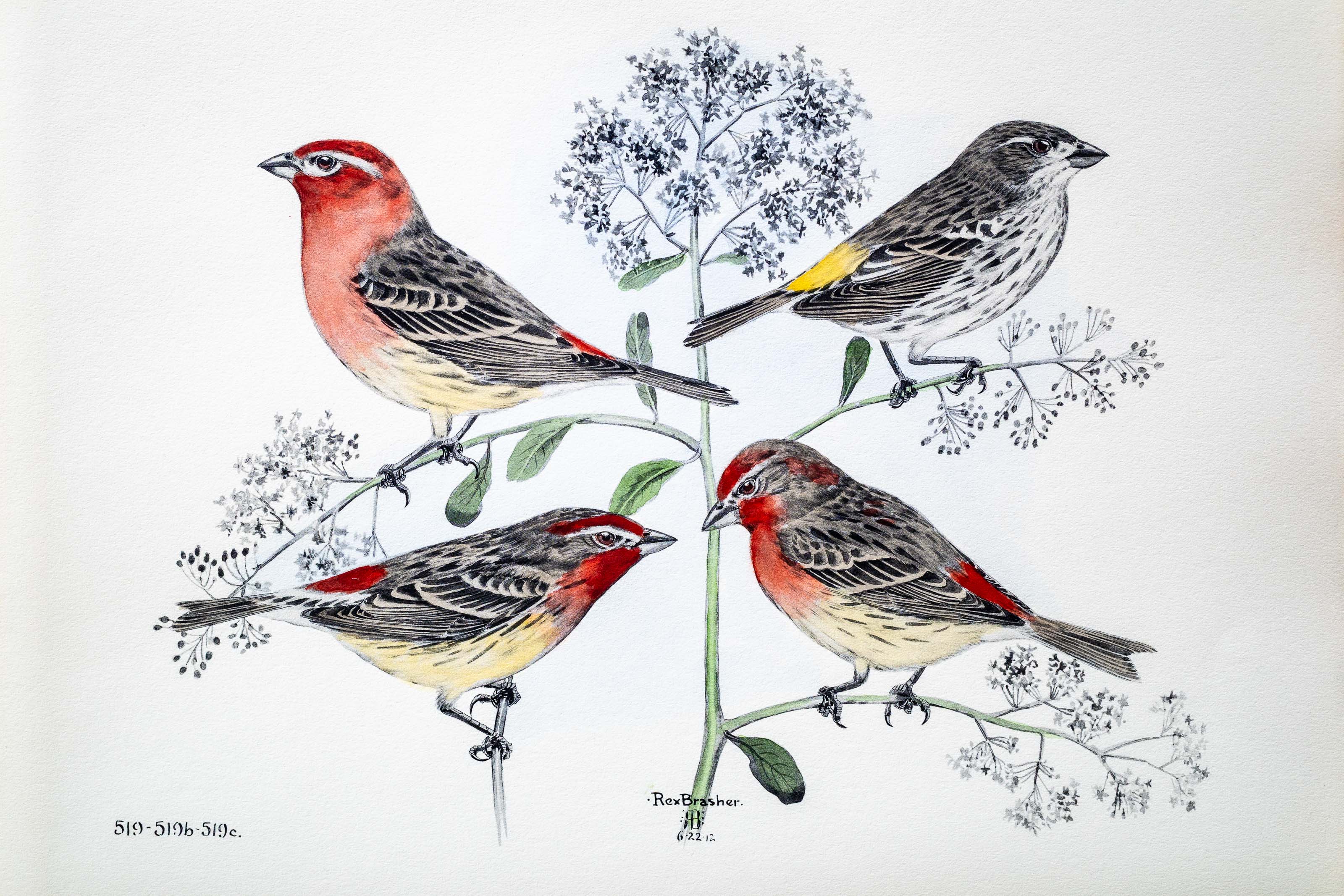

In towns and farms of the West, HOUSE FINCHES are the most abundant representatives of the family. These seem aware that most men are friendly, building their homes and living close to human beings.
In fruit-growing sections they are annoying but the wise farmer is willing to exchange some of his produce for friendliness and song.
They are extremely adaptable to environment. Finley tells how those on San Clemente Island, California, built nests in an available nook of sheep sheds, there being no trees on the island. There was no usual material for these homes so the birds utilized wool and even adapted their appetites to cactus fruit and sheep meat!
Their meanest trait is nicking fruit and spoiling far more than is eaten. Altho 90 per cent of their food is weedseed, if the remainder is broken fruit the grower has ample grounds for dislike.
Western United States, east to western border of Great Plains.
Southern Lower California.
Santa Barbara Islands, California.
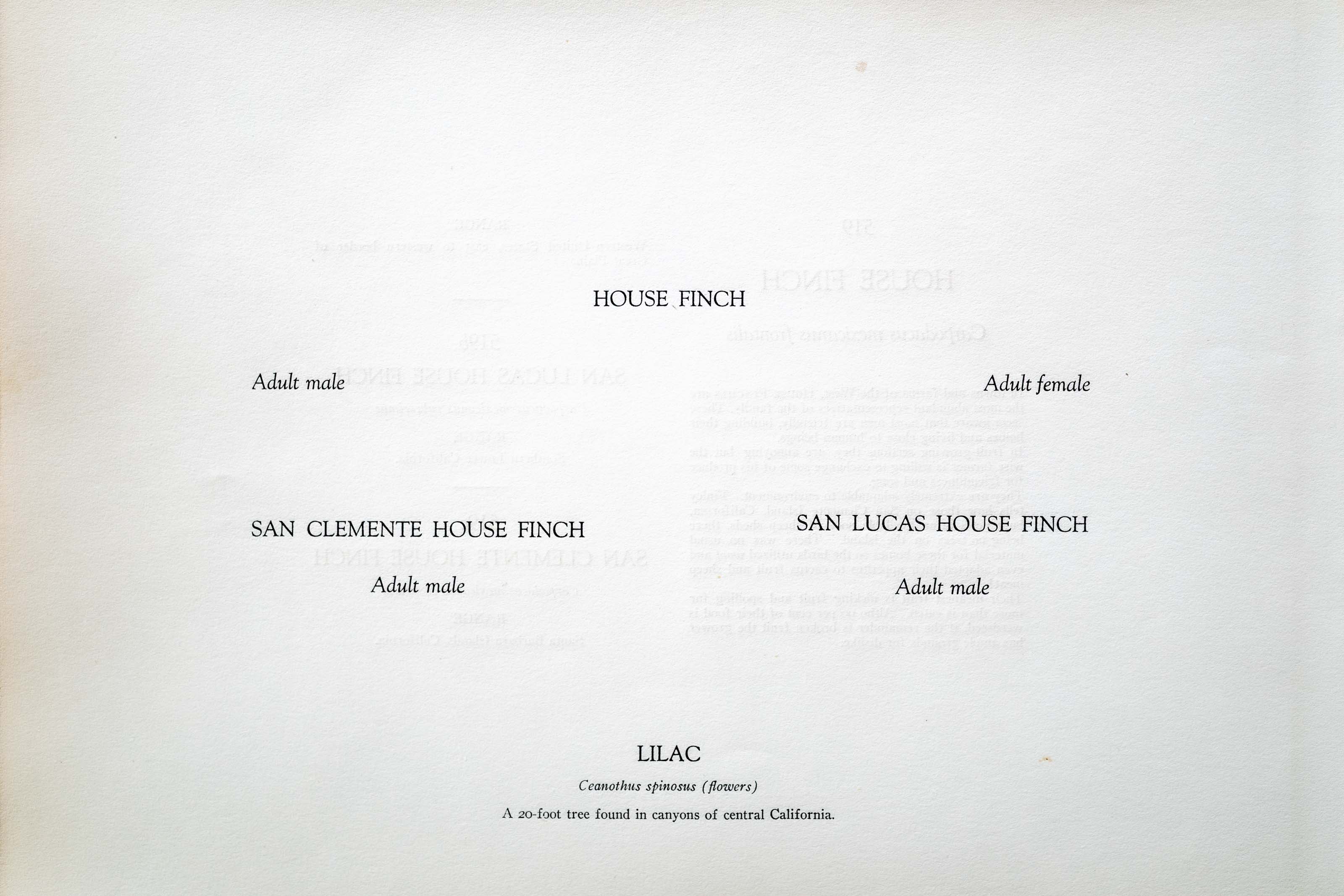
A 20–foot tree found in canyons of central California.