
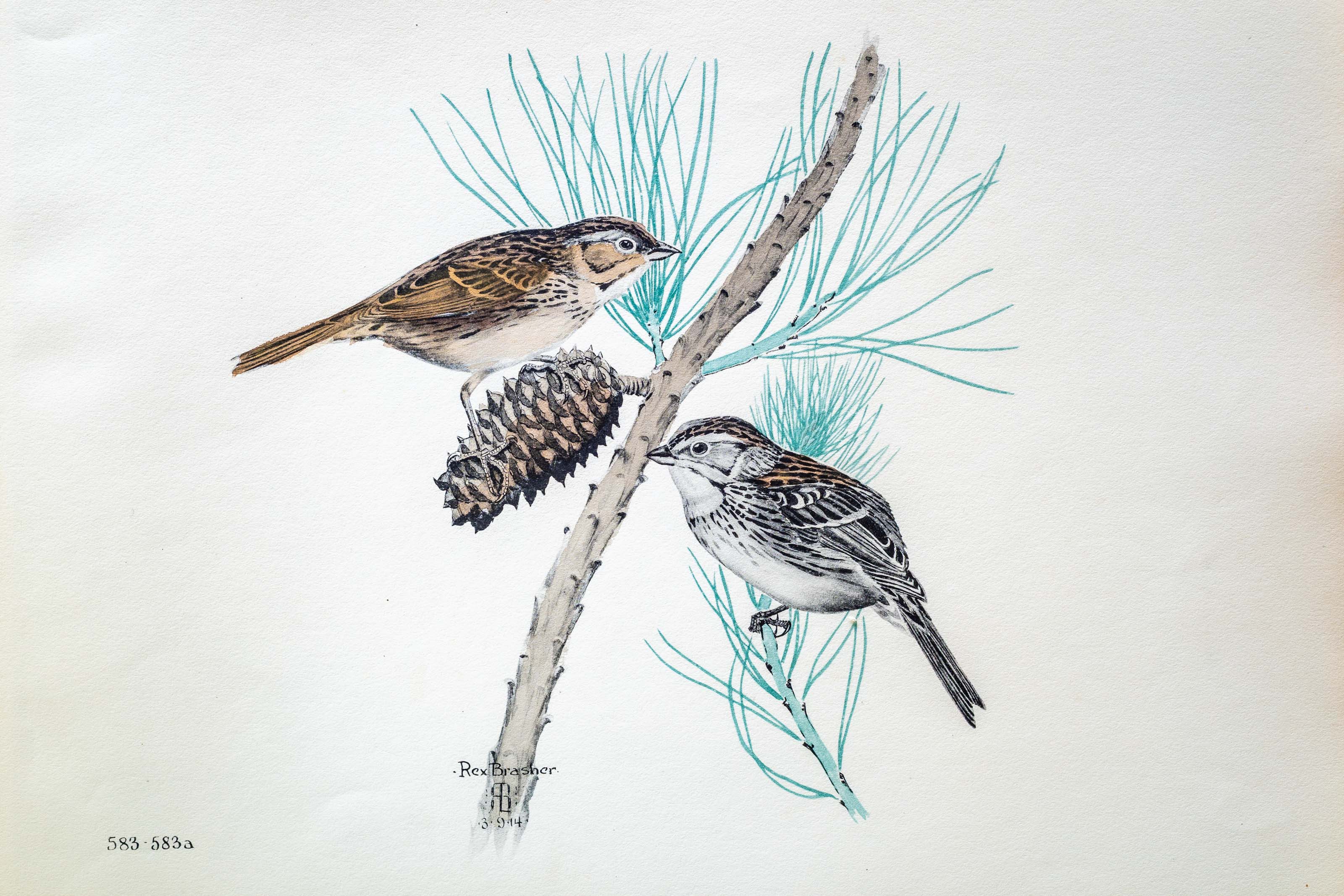


Field identification of this extremely elusive bird is more a matter of knowledge of mannerisms than color. On the rare occasions when a glimpse of a buffy vest lured me to pursuit, the gnomes disappeared with foxlike magic.
In May, 1926, I heard what I thought was a singular House Wren song behind an old barn on our road. Peeking thru a board crack I caught "MR. LINCOLN" on a burdock branch in the act of rendering his odd combination of Wren and Fox Sparrow notes. At the end of the main motif he paused a few seconds, then added a few subdued notes in a different key. That was the only time I have heard one. Their shyness and inconspicuous coloration render them comparatively unknown in country where they probably are fairly common.
NEST: built entirely of grass; located on marshy ground.
EGGS: 3 to 4; white, pale greenish or brownish white, coarsely blotched with chestnut and lavender.
North America. Rare east of Alleghenies. Breeds chiefly north of United States.
Similar to Lincoln Sparrow.
Northward coast region from Prince William Sound and Sitkan district, Alaska; south to Lower California.
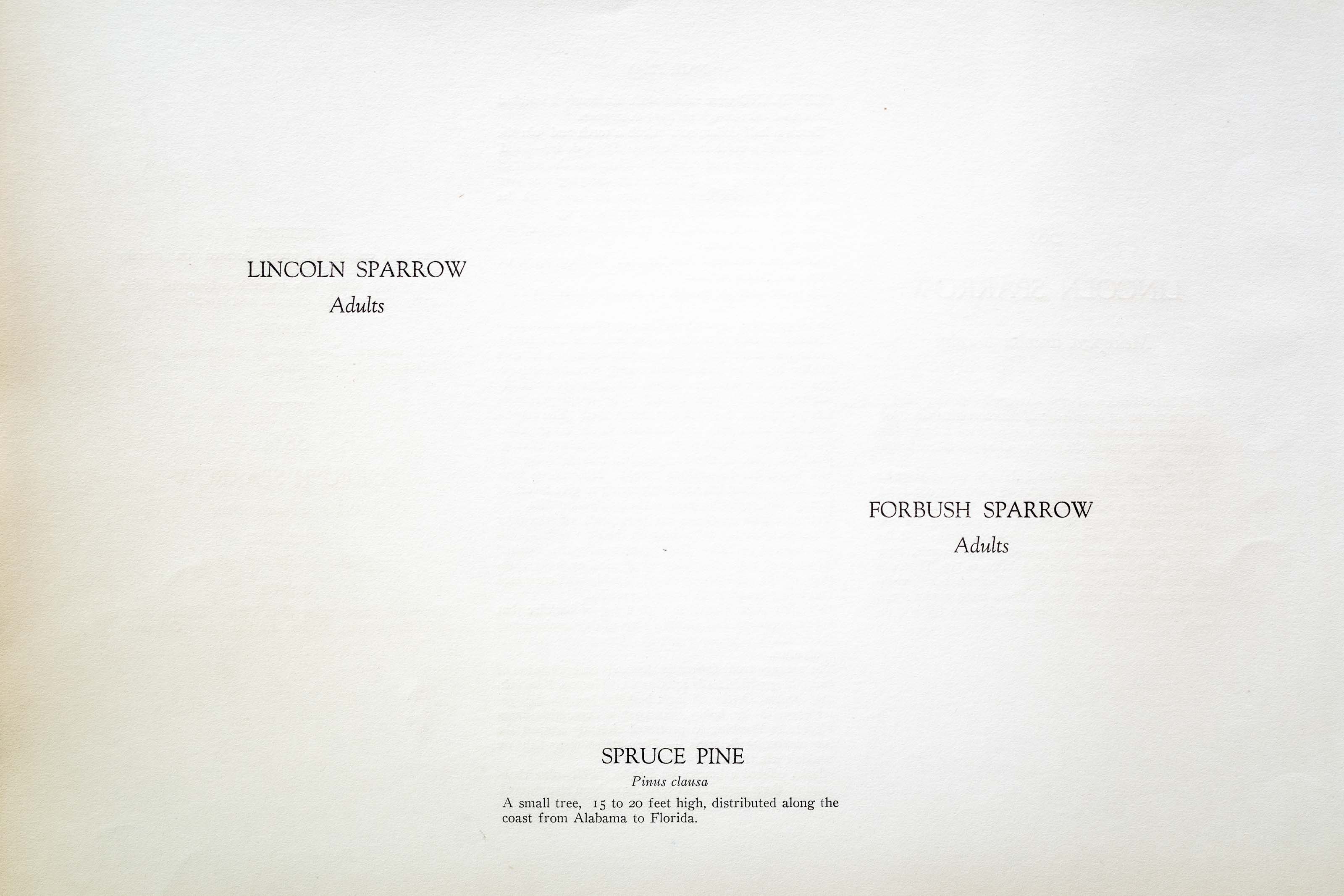
A small tree, 15 to 20 feet high, distributed along the coast from Alabama to Florida.