
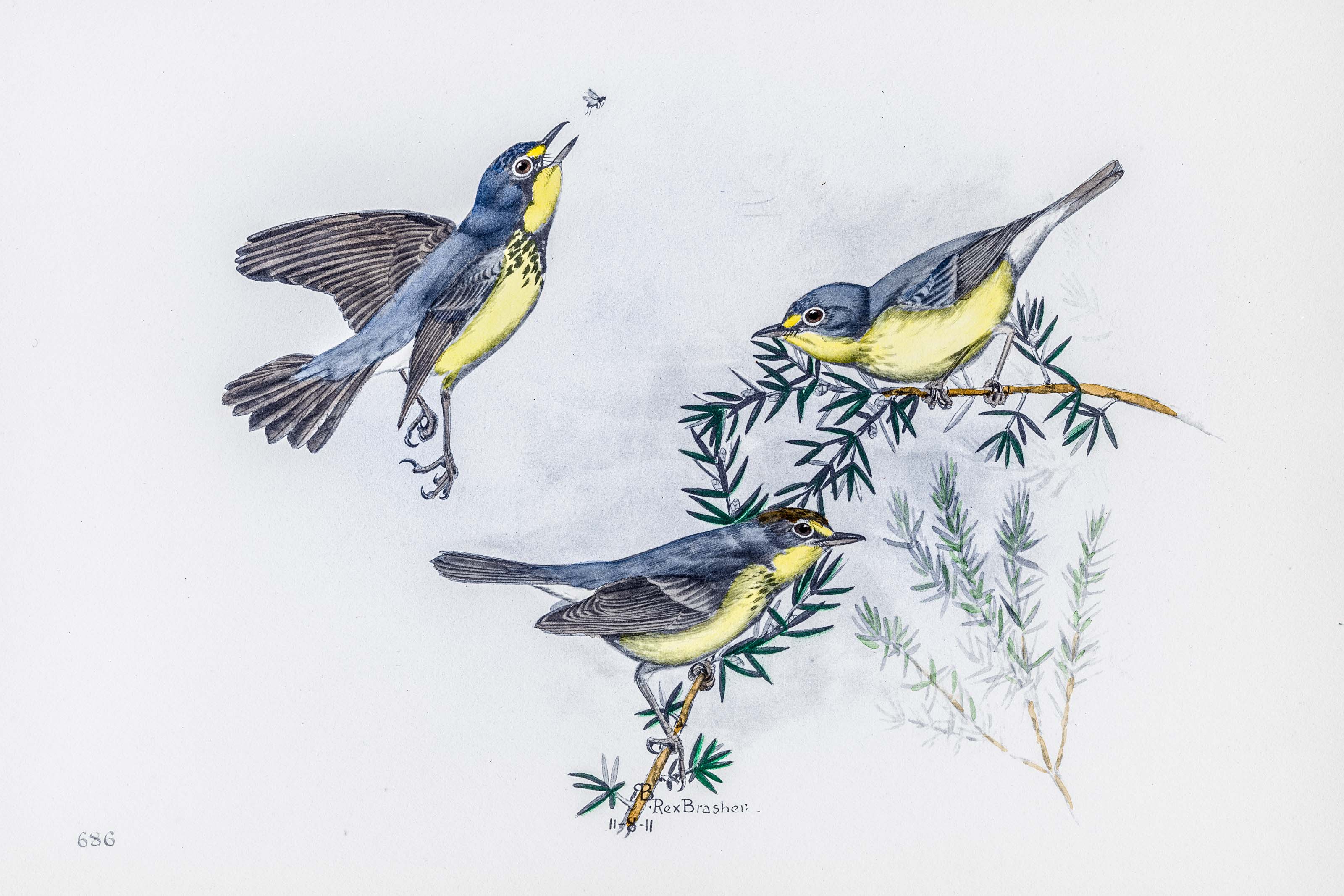
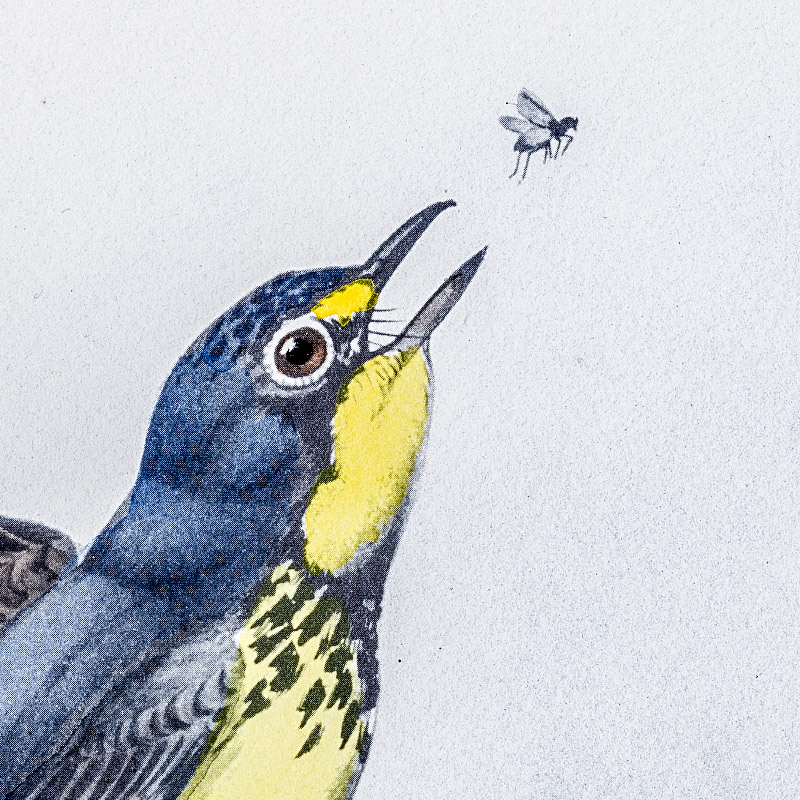

If you love Nature age does not quell thrills. I was 55 years old before I found this little semi-flycatcher's nest, tho I knew they had bred in the Taconic Hills for years.
Regularly, every June morning at four o'clock a male spent almost exactly half an hour singing his liquid notes under my window. Persistent trailing took me to the nest, almost half a mile back near the old wood road. Each time I visited the home to see all was well, the male accompanied me all the way back, singing, hunting and chipping socially. Maybe he was performing the proud father act! He was happy enuf and seemed to know I was not one of the "dangers of field and forest." They raised the youngsters, but alas, neither parents nor children have ever returned.
NEST: Built of old leaves, grass and roots, lined with pine needles, fine roots and hair, well hidden under old log or tussock, usually near streams.
EGGS: 4–5, white or pale buff, spotted with chestnut and lavender sometimes black specks and pencilings.
Eastern North America, from central Alberta, Keewatin, northern Ontario, Quebec and Newfoundland, southward along Alleghenies.
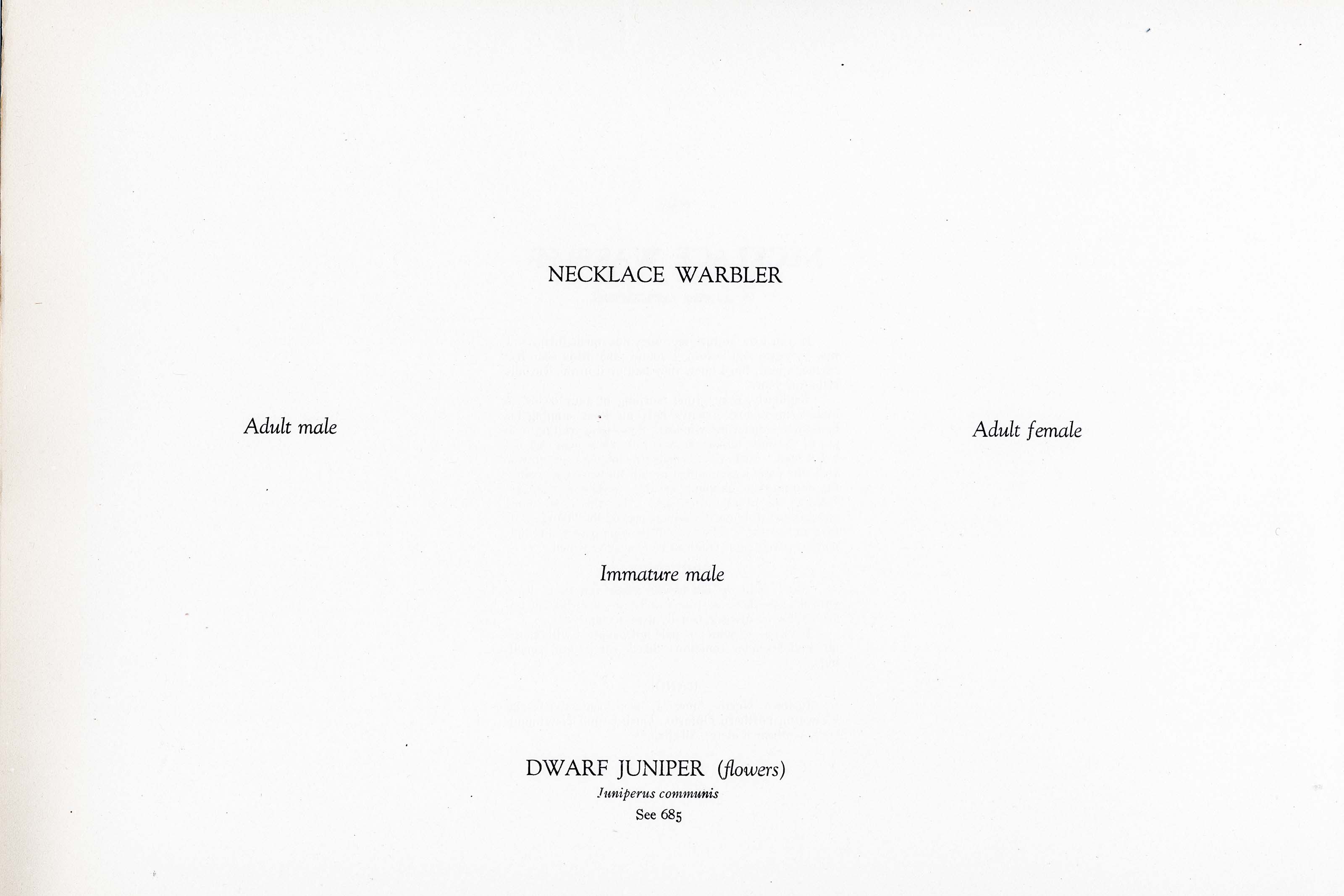
Rarely a tree 20 feet high, usually a many-branched shrub, distributed from Greenland to Alaska, south to northern California, New Mexico, Arizona and Texas.