
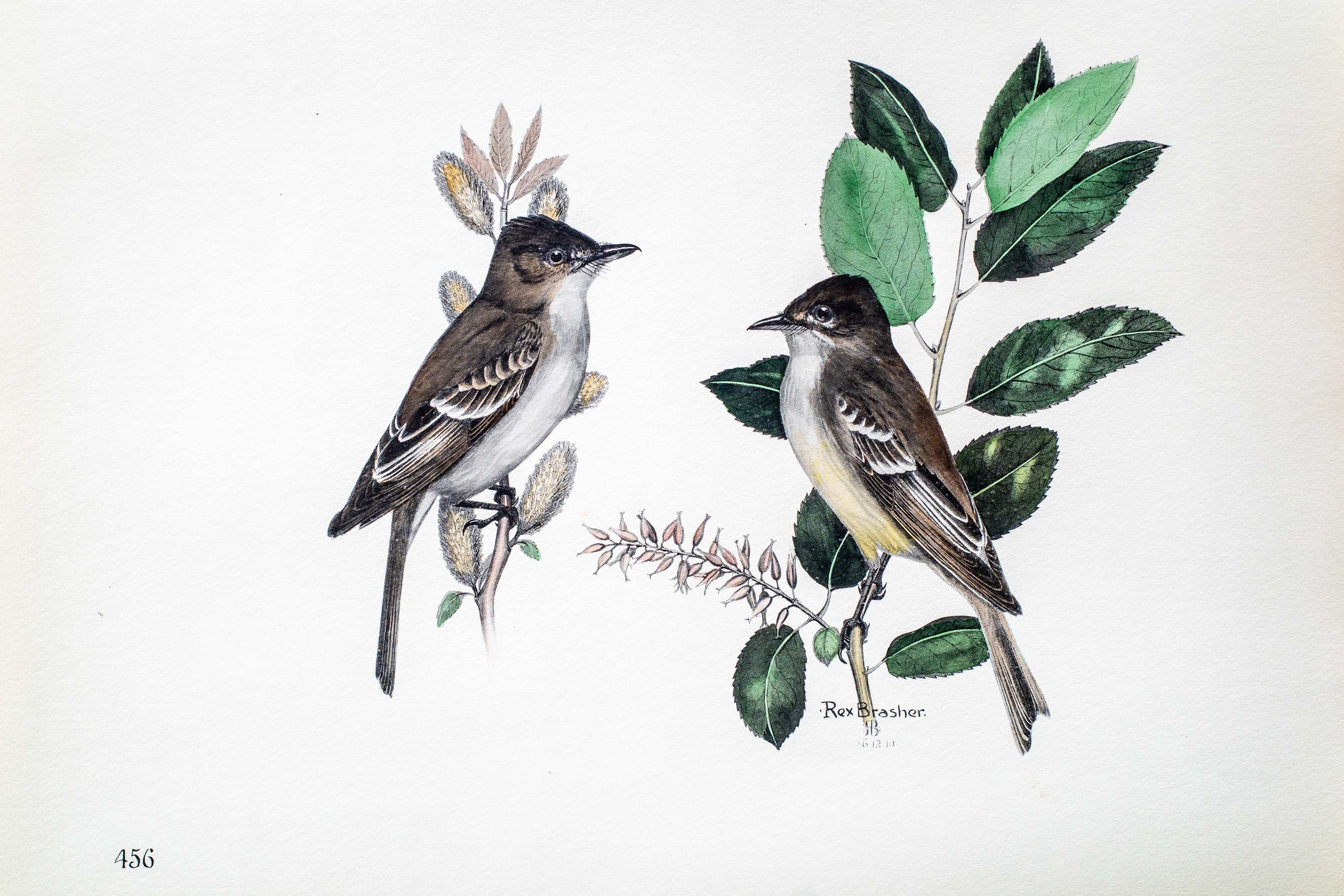

In the apex of the studio eaves, sixty feet from where I write, a pair of PHOEBES have had their home for years. It is July. A faint breeze moves the hickory leaves, glinting a moment on the male's breast when he swings on his sentinel perch. Four children have slid safely down the ways and another launching is on the way. The parents have just met and exchanged confidences in clucking fee-be-be-be-be. There always have been Phoebes here — even when our Song Sparrows have deserted. There must be an irresistible lure in that snug home fastened to the stucco wall. Other birds come and go but our Phoebes are faithful.
When warm April days turn traitor and sleety weather threatens, they seek sheltered nooks deep in the woods where they stay until Spring returns. Gentle, wise and self-reliant, they exemplify that rarest virtue — a well-balanced outlook.
NEST: beautifully built of grass, earth, bark strips; lined with hair and feathers. Outside decorated with green moss. Located under eaves, culverts, bridges or rocks, always with overhead protection.
EGGS: 4–6; pure white.
Eastern United States and southern British provinces. West to eastern Colorado, Wyoming and western Texas.
Shrubby tree, distributed in bogs of eastern North America.