
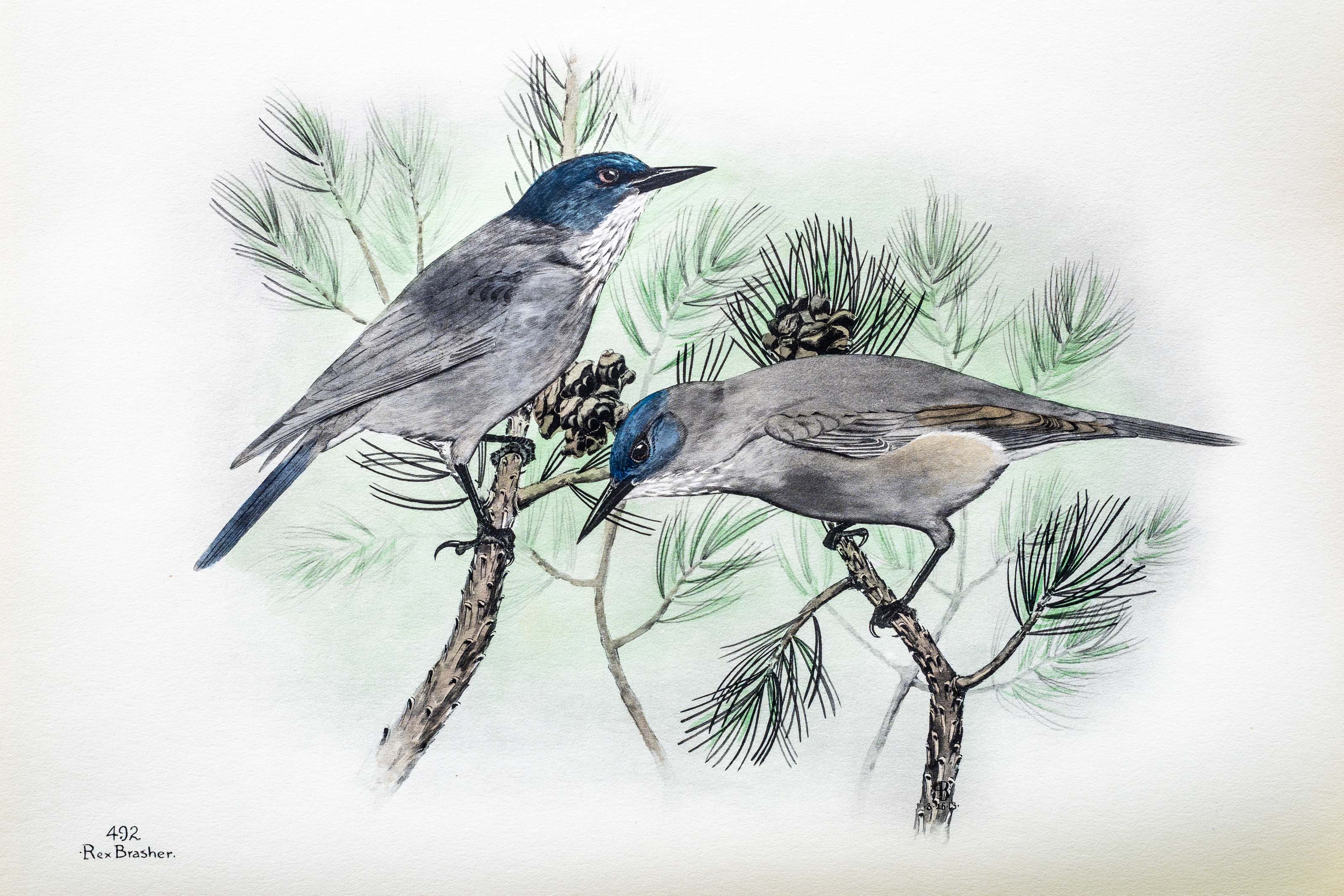
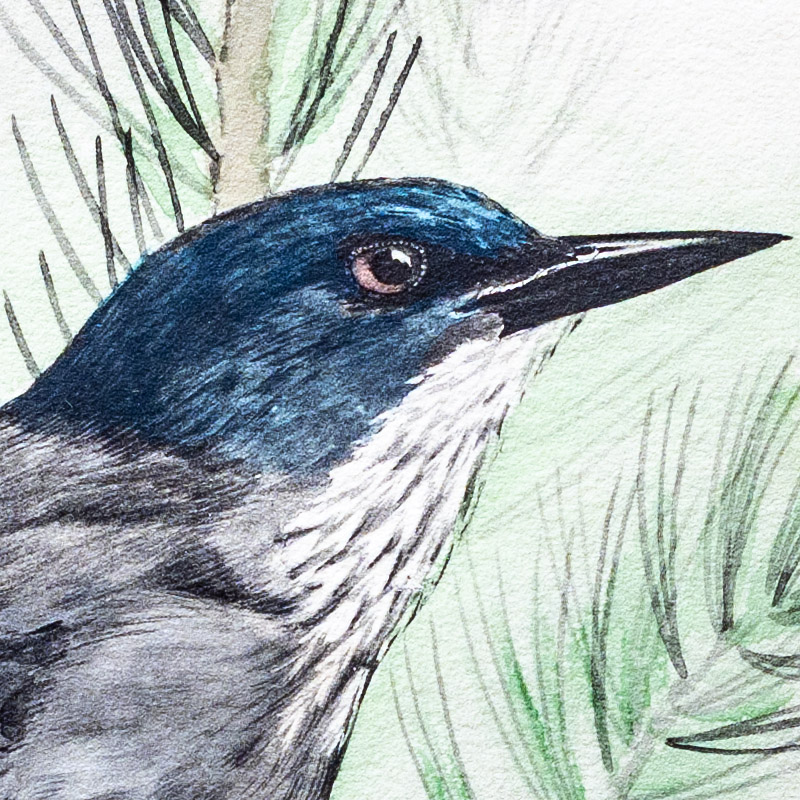
From high coniferous-covered canyon sides the PINYON JAYS make frequent sorties into the fertile lands below. These forays are less frequent in Spring and Summer when food is more abundant on the rugged slopes. The common call has been described as a shrill peeh peeh or cray-er-turt-turt, yet when feeding on the ground in flocks, they keep up a continuous chattering. Altho communal in the nesting season, they are silent and one might be in the midst of a colony and not have the birds betray their presence by calls. The principal food is pinyon nuts or acorn but a farmer's oat stack is not immune from attention during Winter. In Autumn, a flock will suddenly sweep up in a dense mass — whirling in circles or diving wildly as tho pursued by Hawks, and keep up this erratic performance for hours with short rest intervals.
NEST: in conifers, halfway up on branch near trunk, built of twigs and plant stems lined with rootlets and fibre.
EGGS: 4 or 5; pale-green, faintly marked with lilac gray.
Coniferous forests of western United States. North to British Columbia, Idaho and Wyoming. South along eastern side of Rocky Mountains to Arizona, New Mexico and western Texas.
A bushy tree, rarely over 20 feet high, distributed on mountains of southern Arizona and New Mexico.