
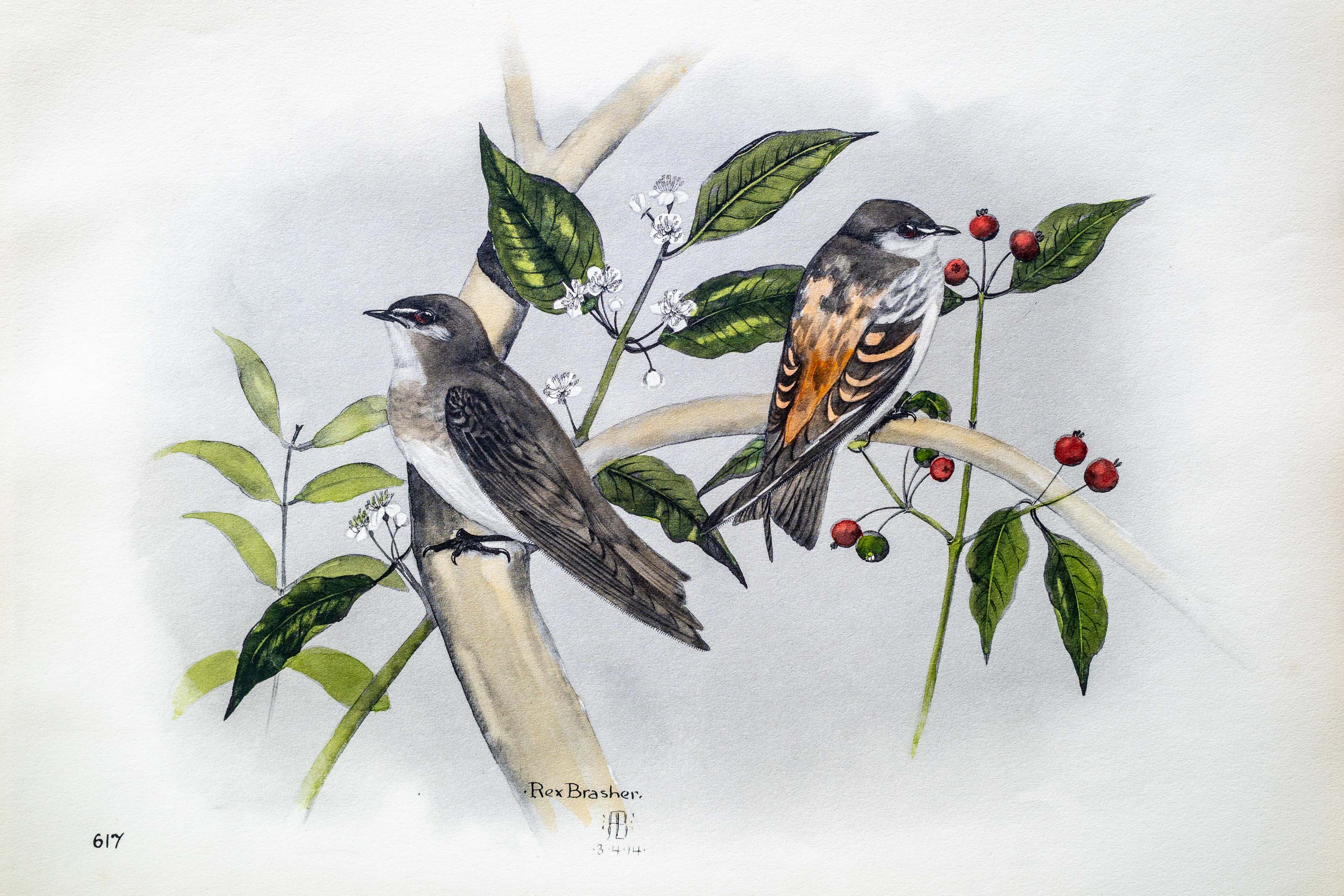


Frequently associated with Bank Swallows yet far less common and generally only several pairs nest together. Their flight is more sedate than others of the family; changing their course is accomplished by curves — not abrupt angles. This peculiar flight enables an observer to separate them from Bank Swallows and is a better identification method than their slightly larger size.
Occasionally they nest under bridges in Phoebe company with whom they are on friendly terms — a rather curious exhibition of tolerance for an outsider but none for another of its own kind, for I have never seen two pairs of Phoebes under the same roof.
NEST: a burrow in a sand bank; larger than Bank Swallows' homes and from three to five feet long. Nest proper in enlarged end; built of small twigs, grass, leaves and feathers.
EGGS: 3 to 6; plain white.
Temperate North America from southern New England, north central states west to British Columbia, southward. More numerous altho extremely local in northern part of its range.
A tree from 15 to 25 feet high, distributed on the southern keys of Florida.