
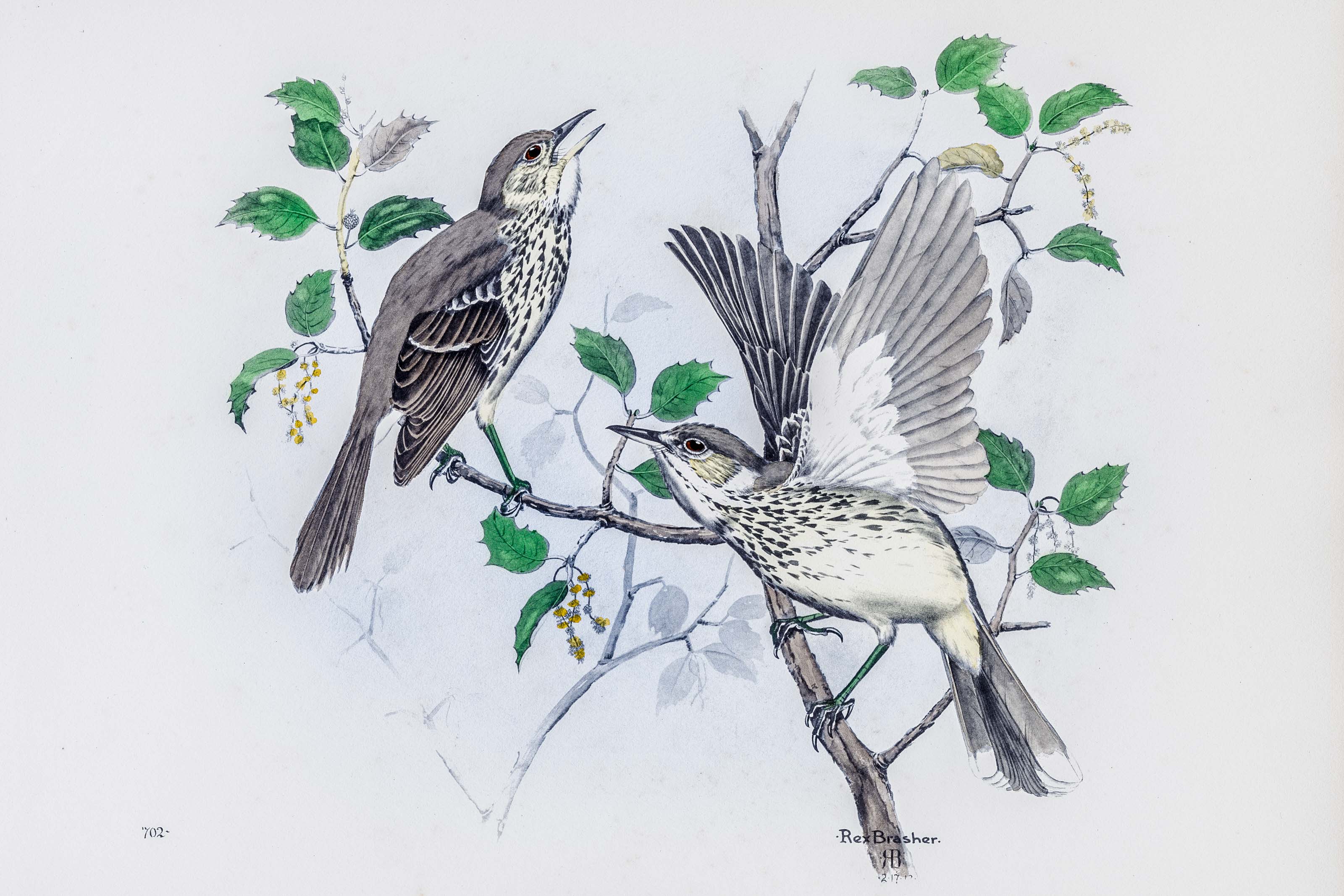
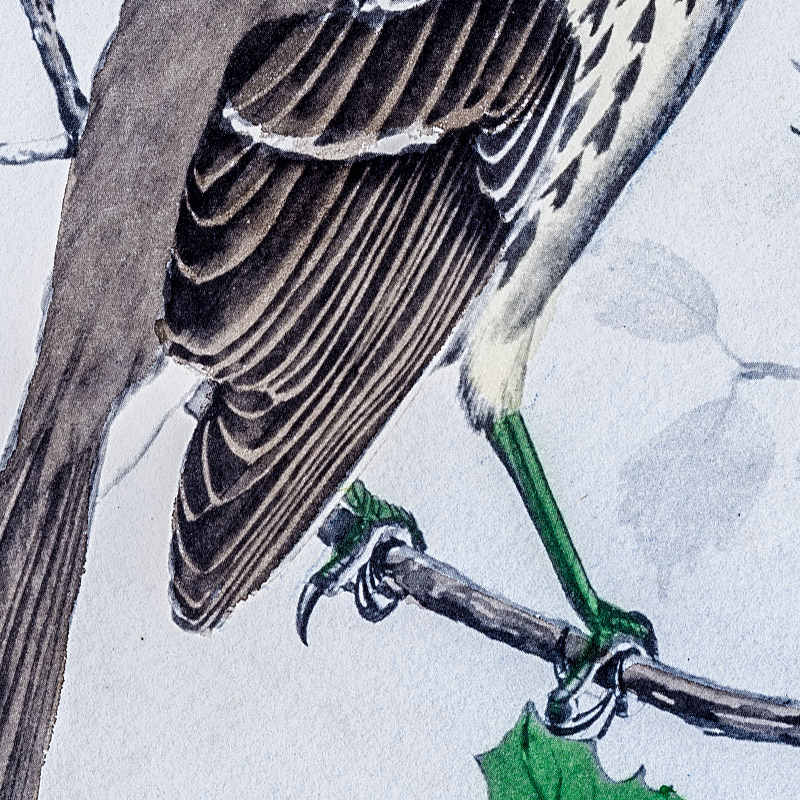
On sagebrush plains or ragged desert western mountains, the SAGE THRASHER makes its home. But for its spotted breast one might mistake it for a young Mockingbird. In early spring when snows on distant mountains are melting and ranks of wild fowl are going north, the Thrasher's song rings far and wide over the sandy wastes. Perched on a sagebush or thorny cactus, it sings and keeps a lookout for mate or rival. More frequently it is seen running on the ground among the bushes. It is equally at home about ranches or far out on uninhabited deserts. I have met them on the plains, beyond sight of human habitation, and again have watched them running about the streets of an adobe Indian village, pausing at intervals to raise their wings playfully, glance around and then resume their travels. —Pearson.
NEST: A bulky structure of coarse stems, grass, twigs and dry sage bark, lined with finer material, located in low bushes within 3 or 4 feet of ground, sage or cactus preferred.
EGGS: 3–5; rich greenish blue spotted with bright chestnut and a few lead-colored specks.
Arid plains and foothills of western United States, from western border of Great Plains to eastern base of Sierra Nevada and Cascade ranges. South to southern California and western Texas.
A 50-foot tree with 3–5-foot trunk, forming dense stands near southern boundary of California.